Corc
An innovative dining chair combining aesthetics with durability and innovative corc material
Henning Nygaard
About
Contact
Objective
Design and build a functional dining chair that combines aesthetic appeal with practicality, showcasing skilled craftsmanship and thoughtful material choices. The project emphasizes sustainability through the use of locally sourced pine and recyclable cork, while addressing structural challenges with innovative reinforcement techniques.
Description
Category - Furniture design, woodworking
Client - Hobby project
Year - 2024
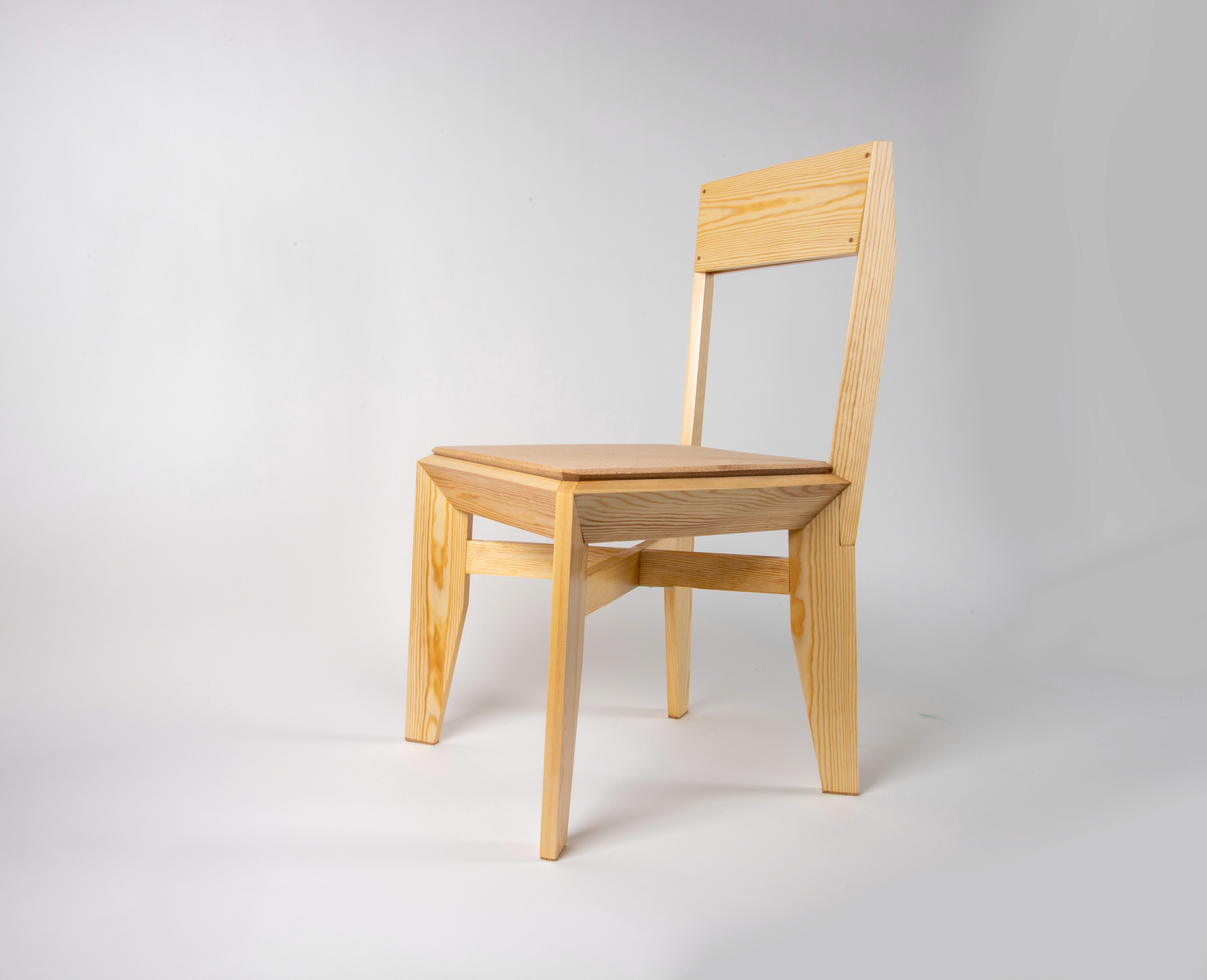
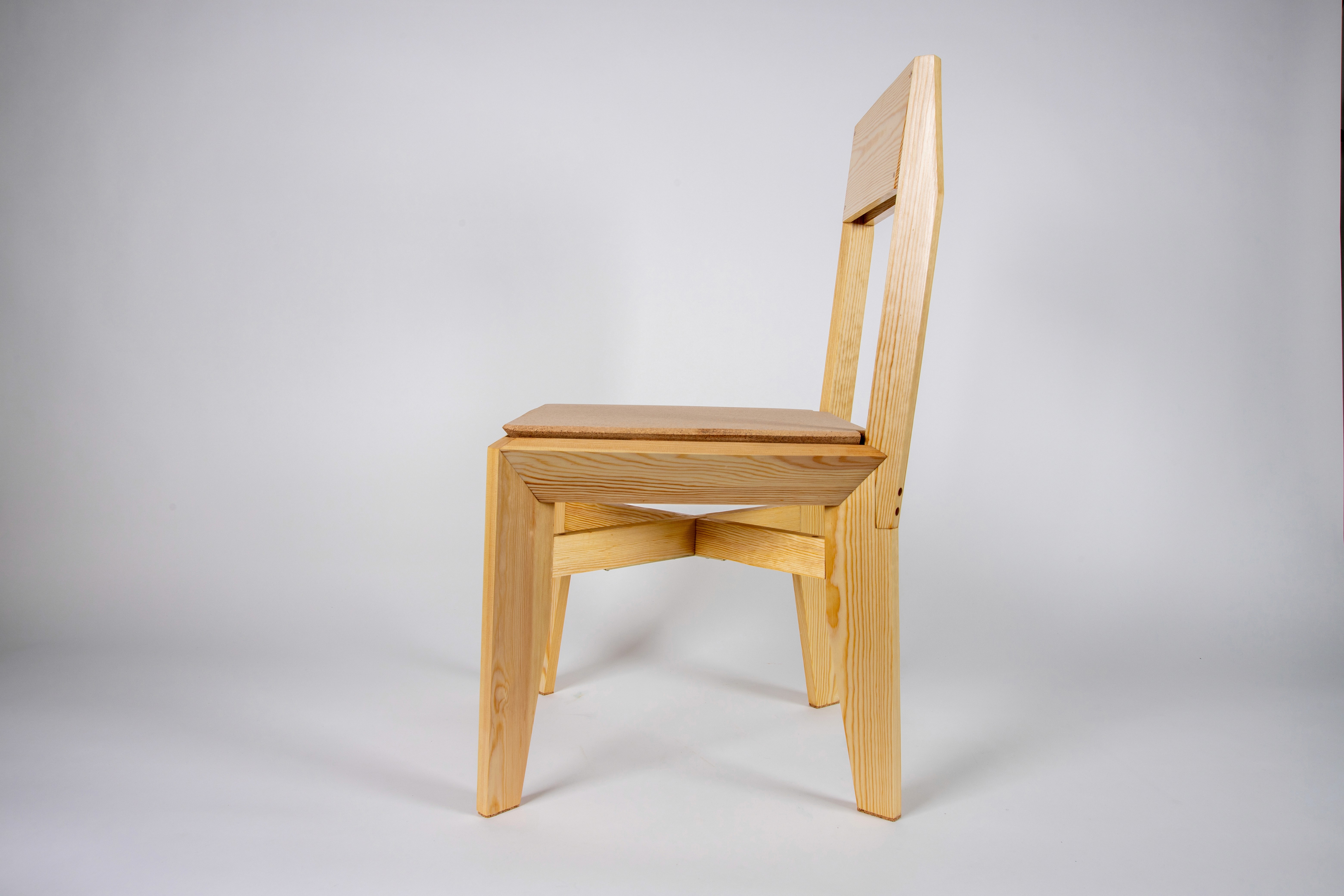
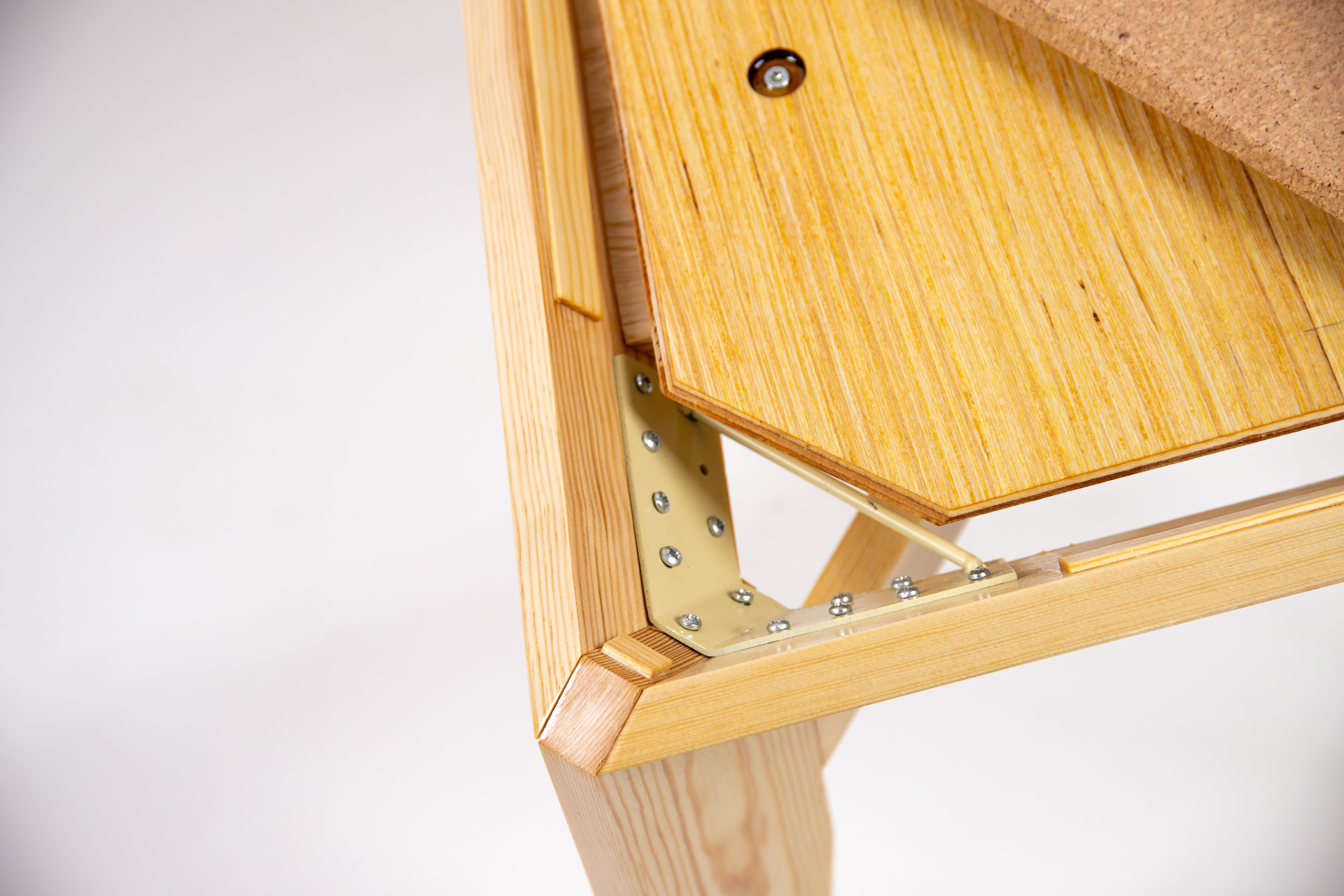
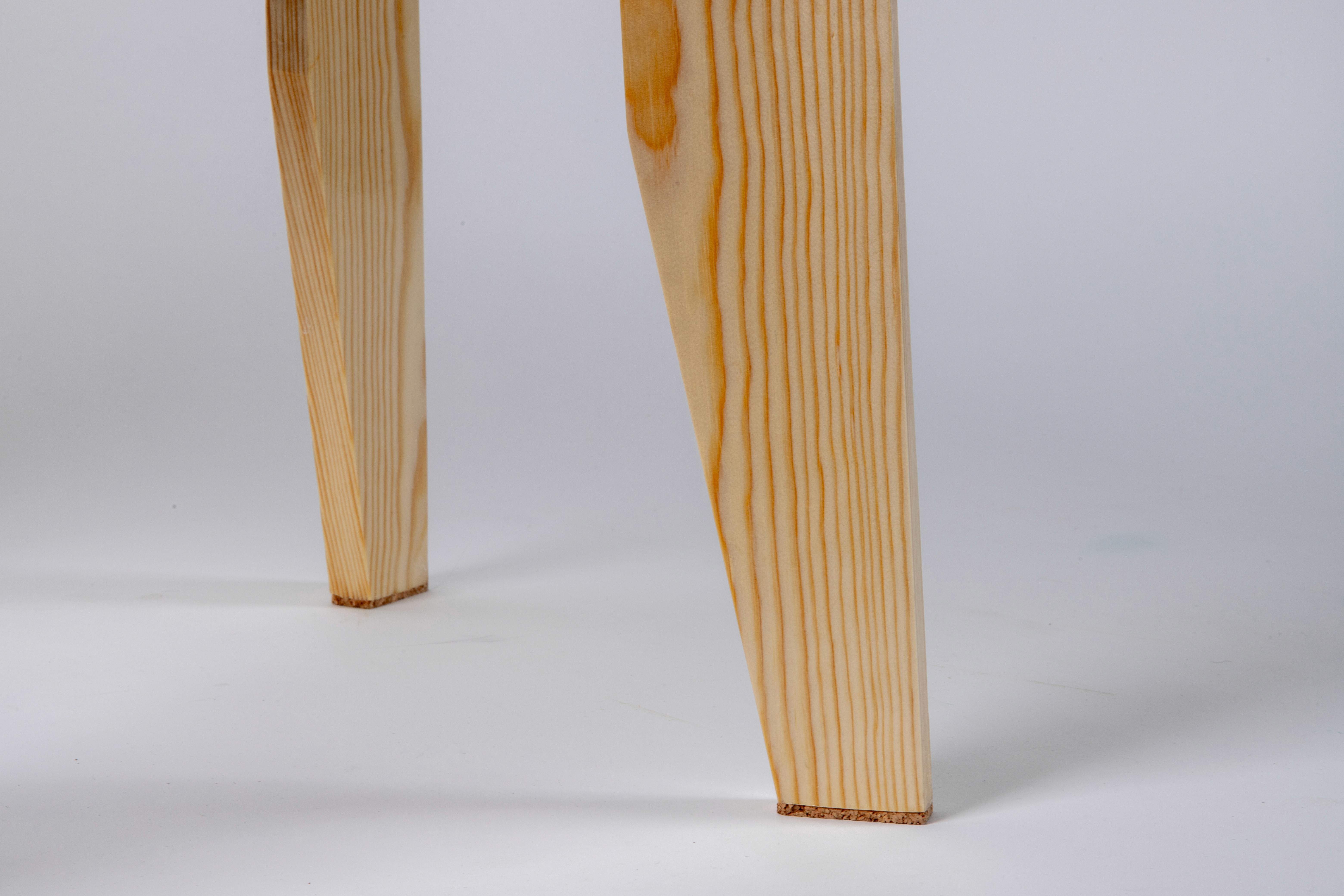
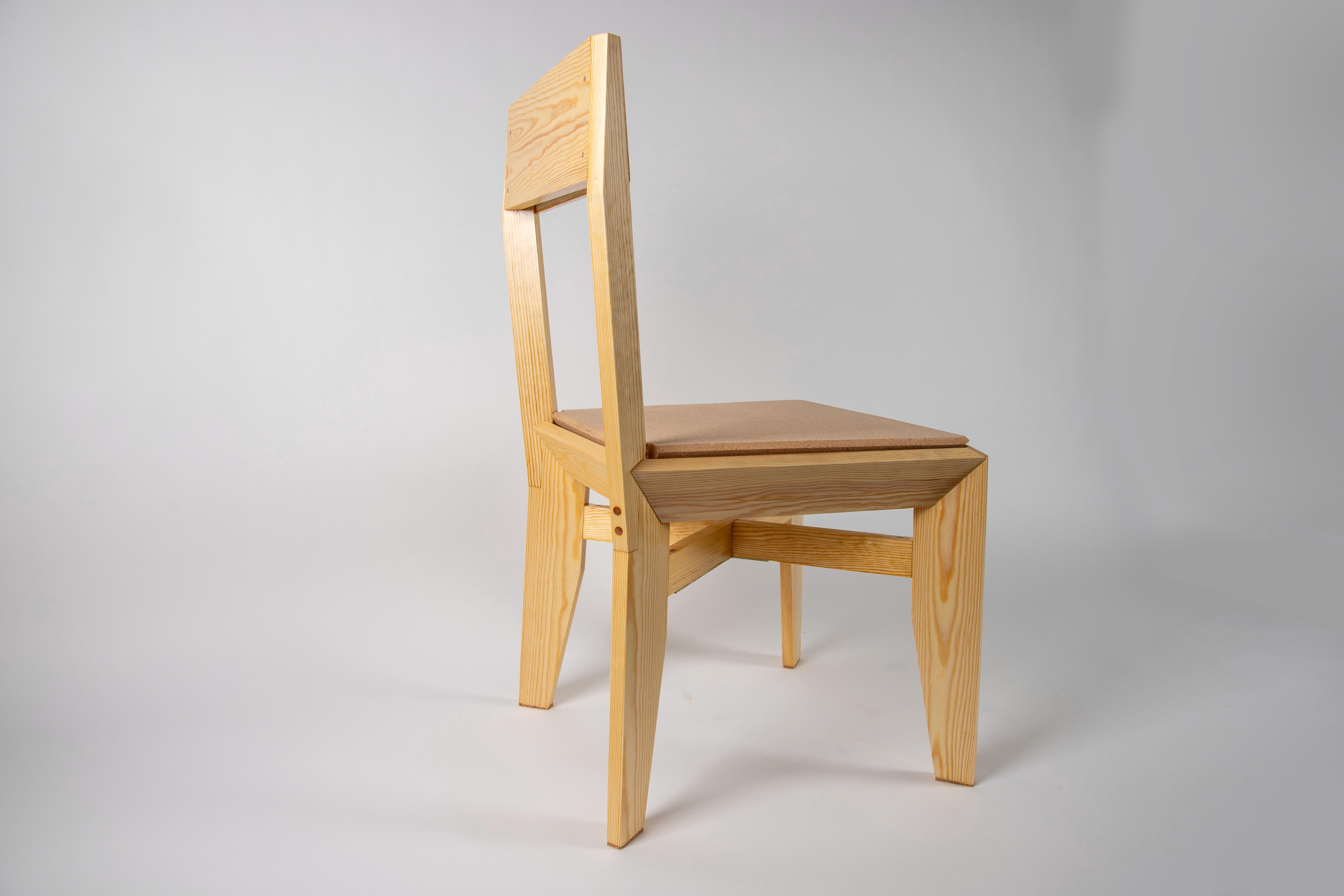
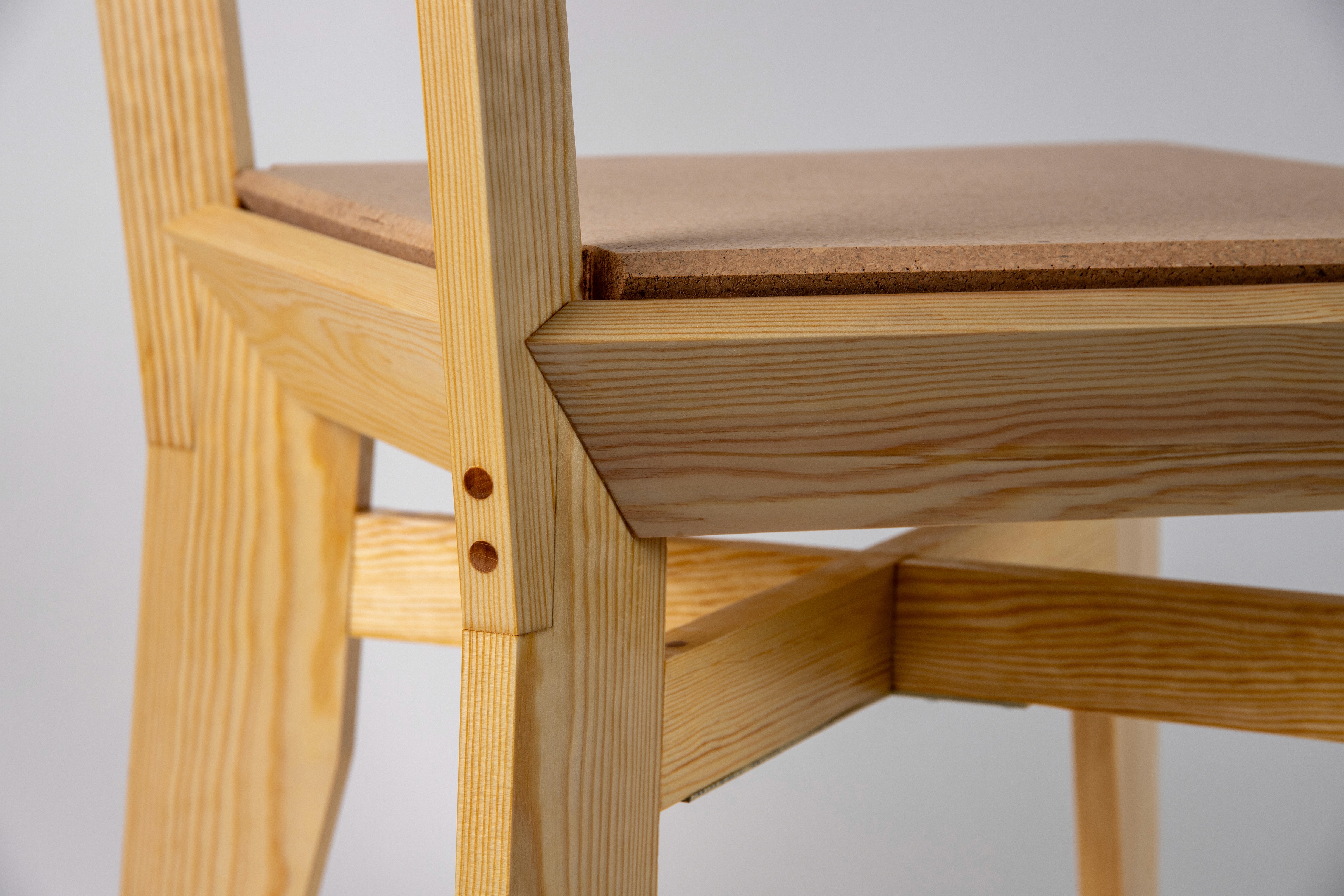
This dining chair combines locally sourced pine and endlessly recyclable cork to create a piece that balances sustainability and thoughtful design. Pine was chosen for its availability and natural warmth, though its softness required innovative reinforcement with metal connectors to ensure durability.
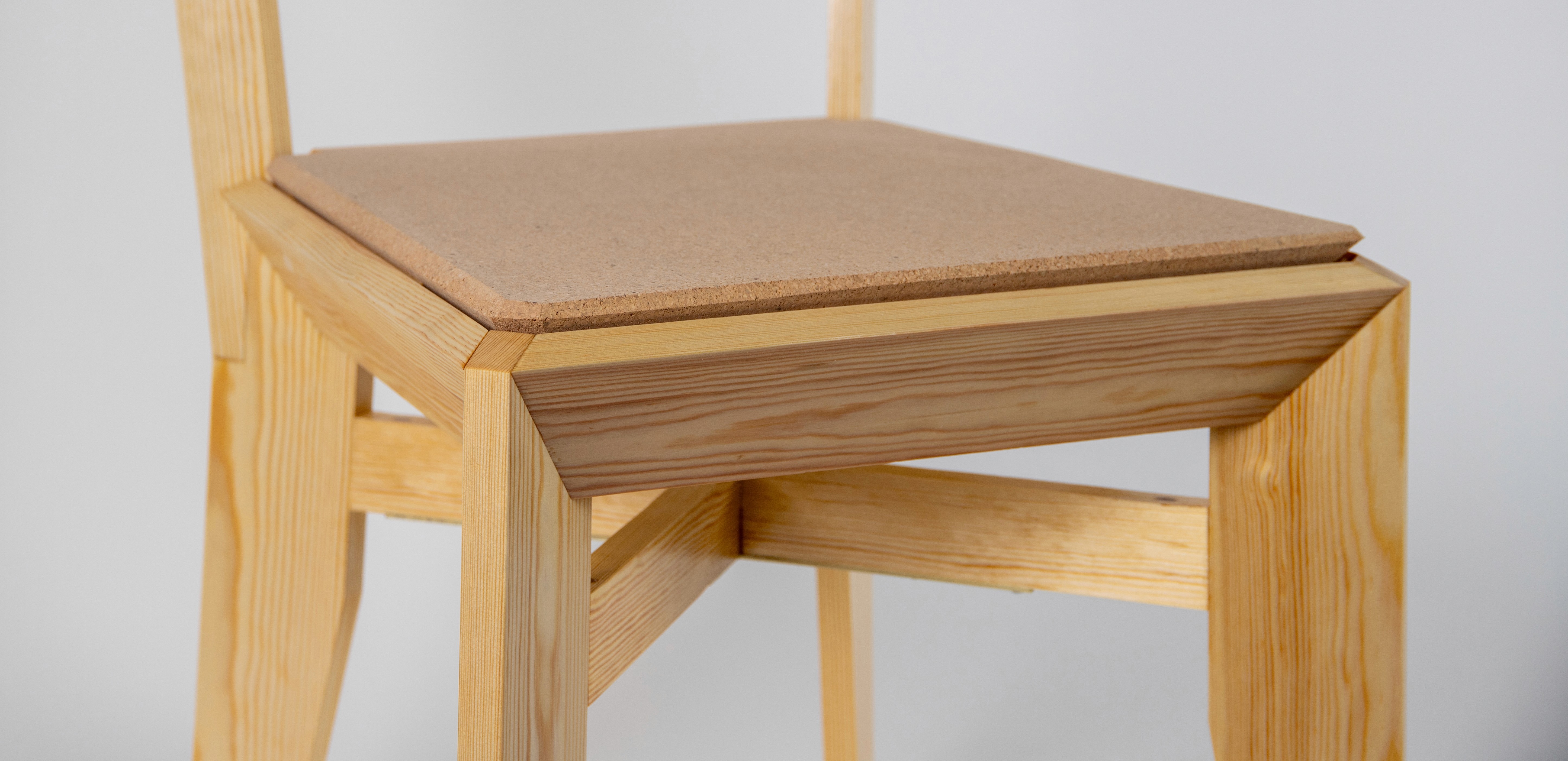
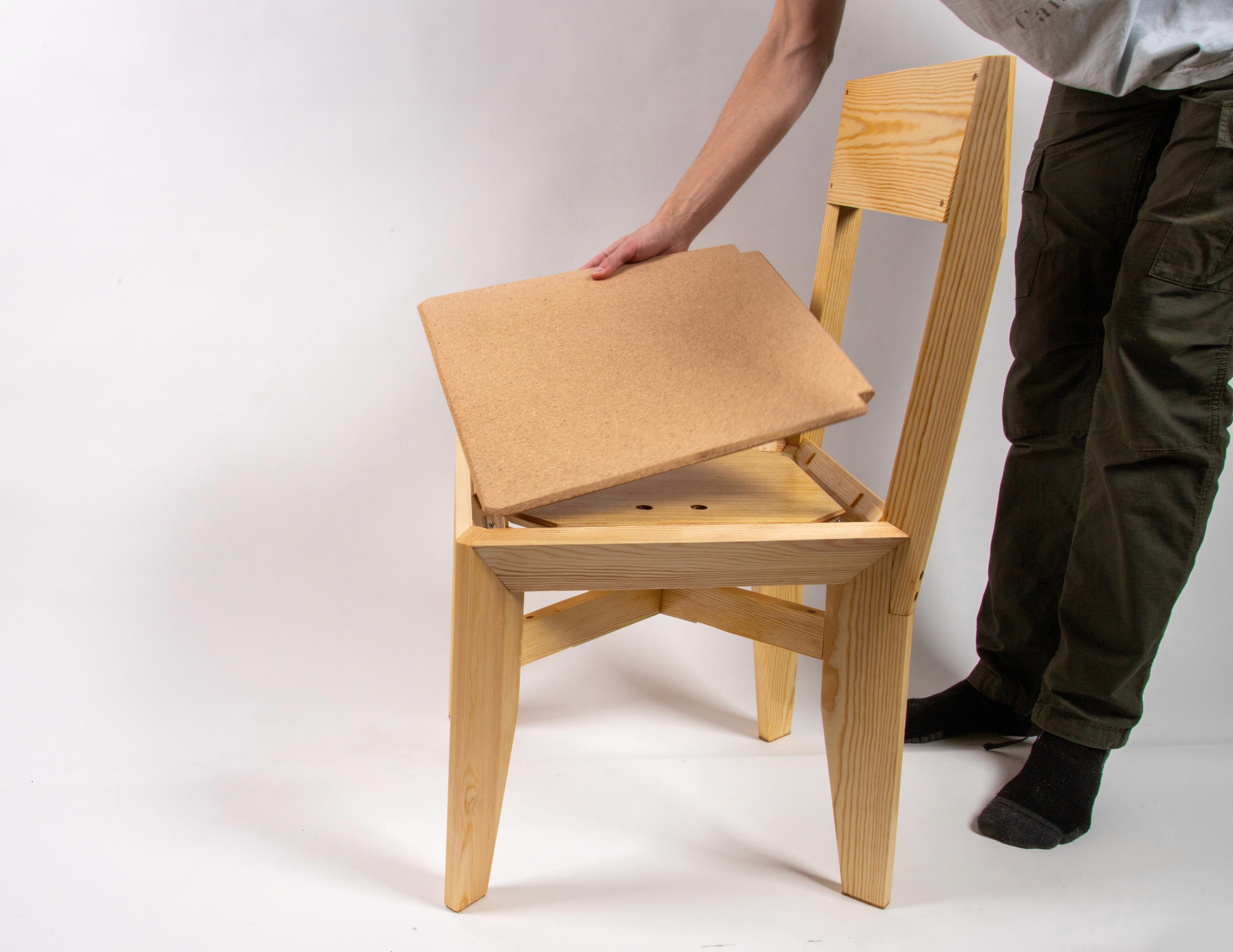
The detachable cork seat not only provides versatility but also offers a sustainable solution for a high-wear component. With a focus on clean geometric lines and organic curves, this chair showcases how material-conscious decisions can meet both aesthetic and functional goals.
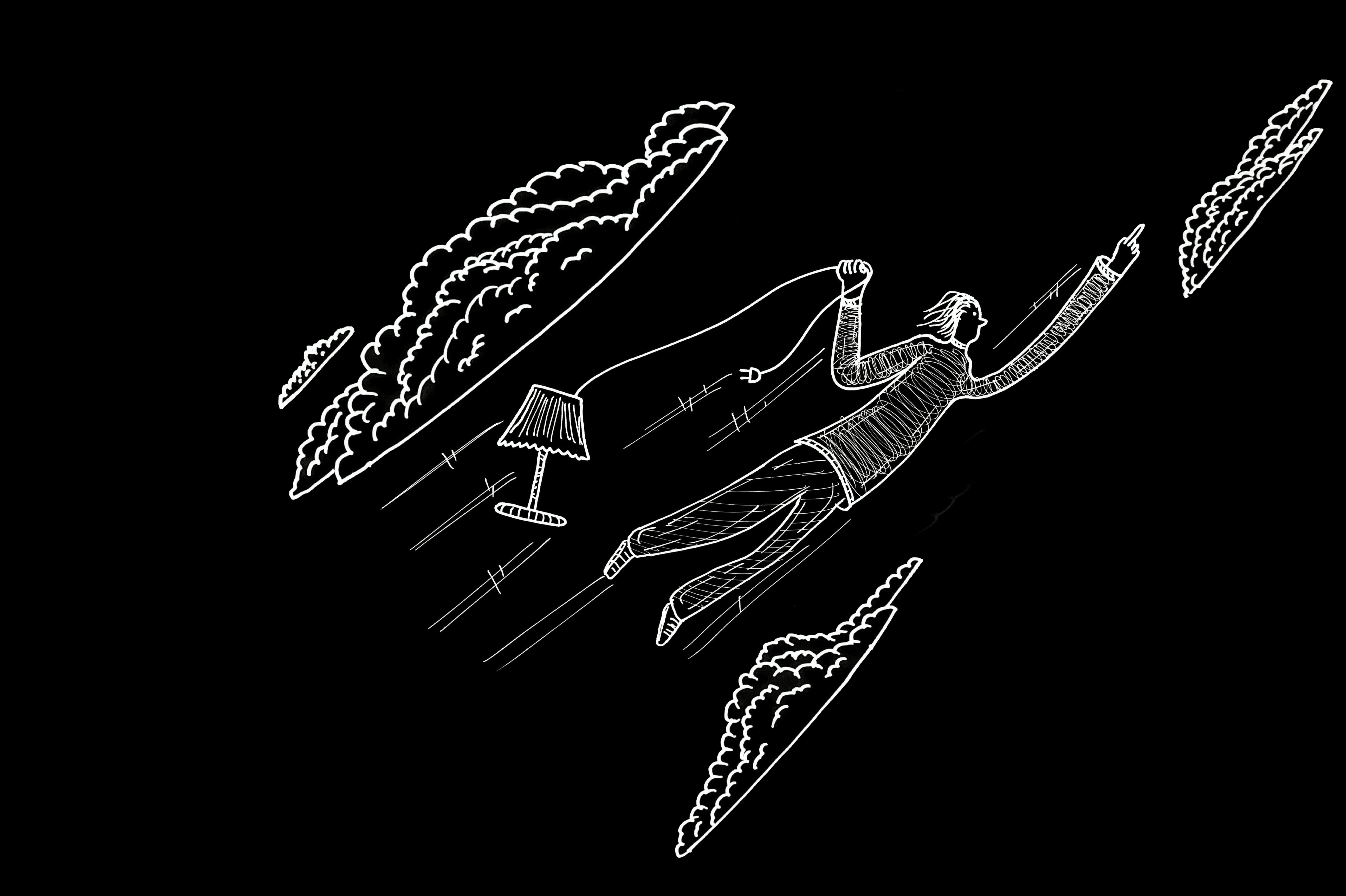
The chair’s aesthetic was developed through extensive sketching, exploring the interplay between geometric and organic forms. Using Fusion 360, I translated these ideas into precise CAD models to refine proportions and determine accurate measurements. Prototypes were then built to test the dimensions, ergonomics, and structural integrity. Finally, I produced all the necessary pieces and assembled the chair.
Structural integrity
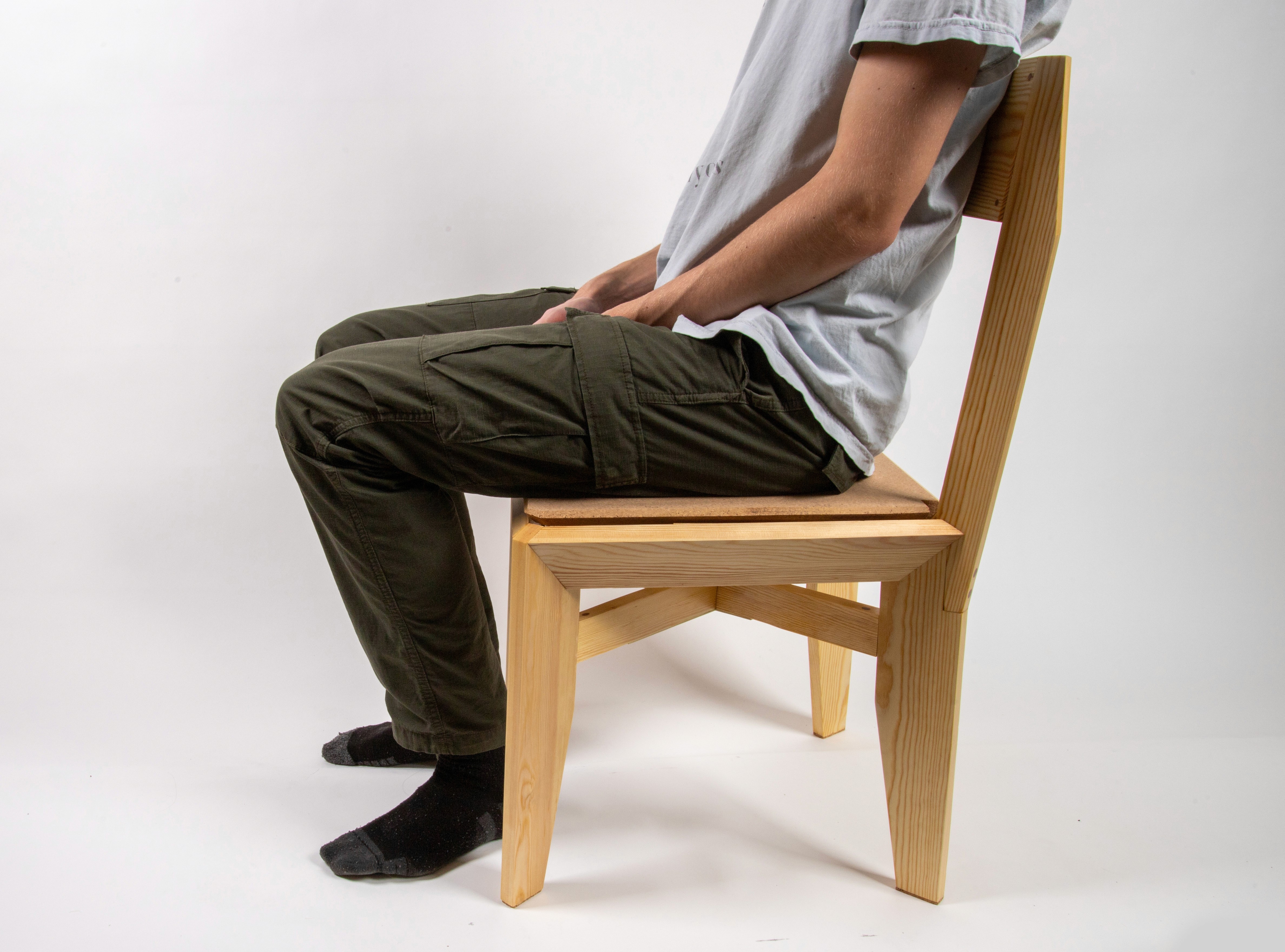
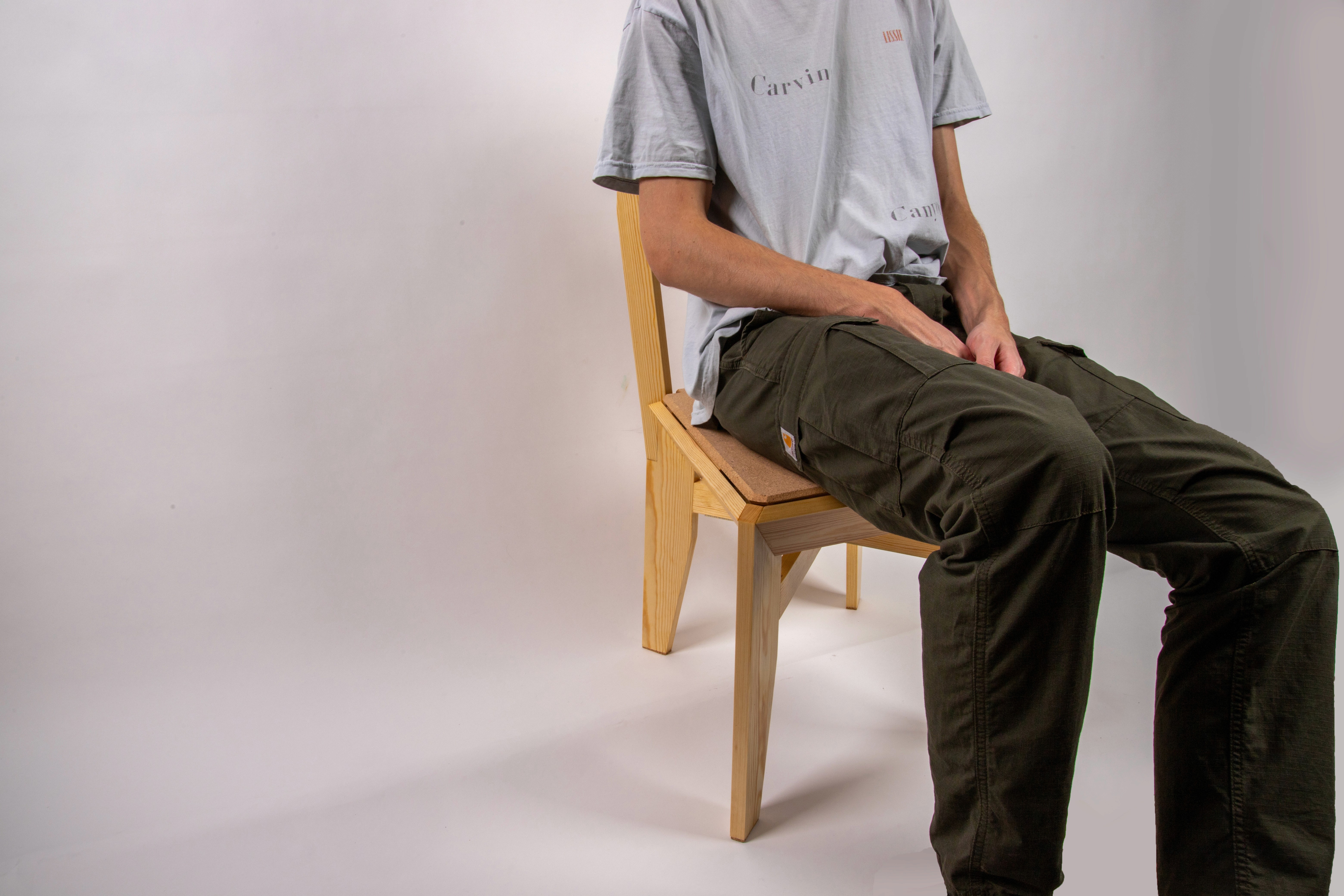
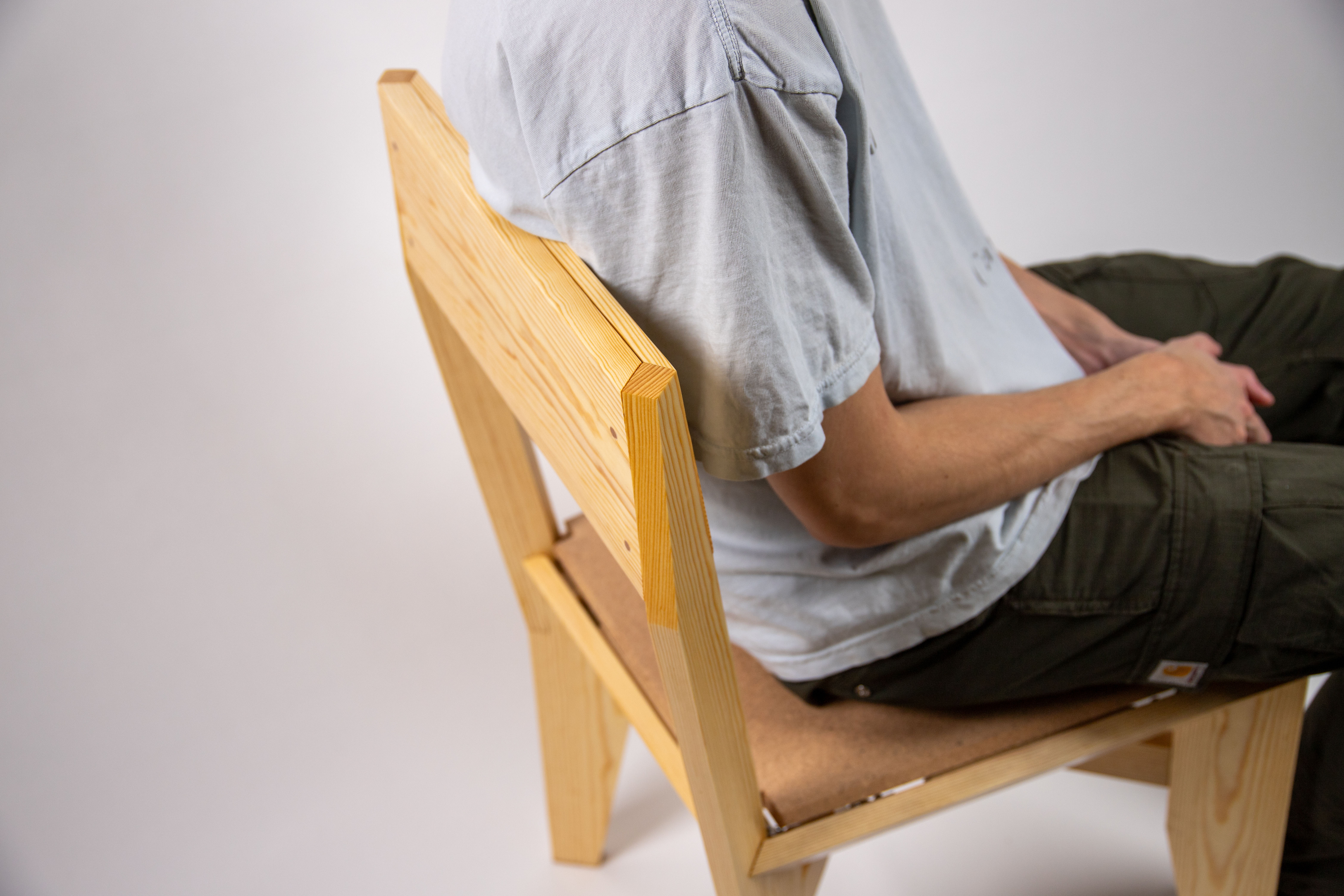
The corc seat provides a natural softness. Continous testing with prototypes throughout the process ensured an ideal height and angle for the back rest. The costum made steel connectors provide the necessary structural integrity that enables the chair’s aesthetic design. Made from a 2mm steel sheet with a bolt welded fast provides a long lasting and secure connection.
This project challenged me to balance aesthetics with functionality while working within the limitations of locally sourced materials. Through problem-solving, such as reinforcing the soft pine frame with metal connectors, I gained a deeper understanding of material properties and structural design. The process also reinforced the importance of prototyping to validate measurements and ergonomics. Overall, this project not only strengthened my technical skills but also reaffirmed my commitment to sustainable and thoughtful design practices.
Reflections
Design process